How to Polish an Acrylic Watch Crystal at Home: The Ultimate Guide
How to Polish an Acrylic Watch Crystal at Home: The Ultimate Guide
There is an undeniable, warm charm to vintage timepieces, but that charm comes with a practical reality: they get scratched. Modern luxury watches use incredibly hard synthetic sapphire, but mid-century pieces rely almost exclusively on plexiglass. If you own a vintage piece, learning how to polish an acrylic watch crystal is a mandatory rite of passage.
Just last month, I was walking along the pebbles on Brighton beach and accidentally brushed my 1960s Omega Seamaster against the rough stone wall of the promenade. I looked down to see a massive, ugly scuff right across the center of the dial. Ten years ago, I would have panicked and rushed to a watchmaker, expecting a £50 repair bill. Today, I know that it takes less than ten minutes and roughly £5 worth of supplies to fix it completely.
Here is our definitive, step-by-step guide on how to safely restore your vintage timepiece to its former glory.
Why Did Vintage Brands Use Acrylic?
Before you learn how to polish an acrylic watch crystal, it helps to understand why it is there in the first place. You might see it referred to under various trade names: Plexiglass, Hesalite (famously used by Omega on the Moonwatch), or simply acrylic glass (PMMA).
While it scratches much easier than modern sapphire, it has two massive advantages. First, it is highly shatter-resistant. If you drop an acrylic watch, the plastic might dent or scratch, but it won’t shatter into microscopic shards that destroy the mechanical movement inside. Second, and most importantly for us, it is incredibly malleable. Because it is a soft plastic, you can easily polish an acrylic watch crystal to look brand new, over and over again.
What You Need to Polish an Acrylic Watch Crystal
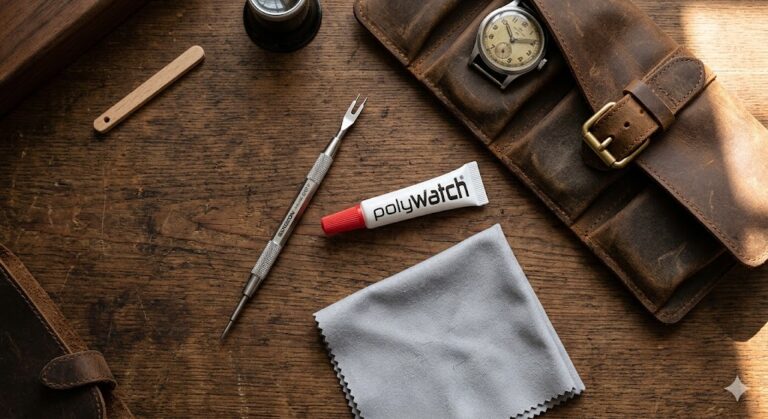
To do this correctly, you do not need expensive motorized tools like a Dremel. In fact, using power tools can melt the plastic due to friction heat. You only need a few items from our essential vintage watch maintenance kit:
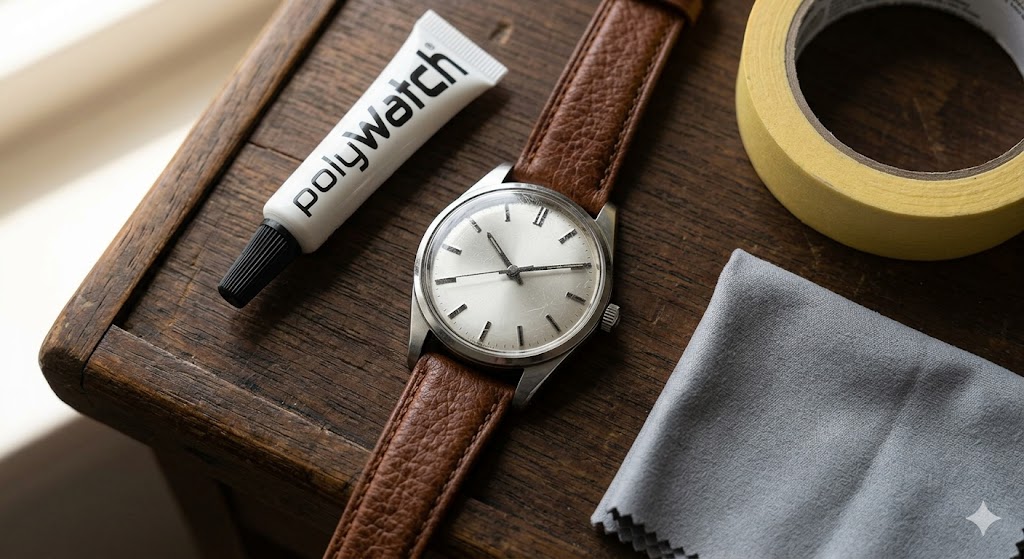
- Polywatch: This is the industry-standard abrasive paste. It costs around £5 and one tiny tube will last you years.
- Masking Tape: Standard painter’s tape or Kapton tape to protect the metal bezel.
- Microfiber Cloth: A clean, lint-free cloth for application and buffing.
Step-by-Step: How to Polish an Acrylic Watch Crystal
Take your time, work in a well-lit area, and follow these steps carefully.
Step 1: Tape the Bezel
The abrasive compound in Polywatch is designed to eat away microscopic layers of plastic. However, it will also alter the brushed or polished finish of your metal watch case if you aren’t careful. The safest way to polish an acrylic watch crystal is to meticulously apply small strips of masking tape around the metal bezel, exposing only the plastic.
Step 2: Apply the Compound
You do not need a lot. Squeeze a tiny drop of Polywatch—roughly the size of a grain of rice—directly onto the deepest scratch on the crystal.
Step 3: The Buffing Process
Take your clean microfiber cloth and wrap it tightly around your index finger. Apply firm, downward pressure to the crystal and begin rubbing the paste in small, circular motions. The trick to a perfect finish when you polish an acrylic watch crystal is friction. You want to generate a tiny bit of heat to help the abrasive compound smooth out the edges of the scratch. Continue buffing in circles for two to three minutes.
Step 4: Clean and Inspect
Wipe away the remaining white residue with a clean section of your cloth. Hold the watch up to a harsh light source to inspect your work. If the scratch was superficial, it should be completely gone. If it was a deep gouge, you may need to repeat the process two or three more times.
When NOT to Polish an Acrylic Watch Crystal
While this technique works miracles on 95% of surface scuffs, there are times when deciding to polish an acrylic watch crystal is the wrong move.
If the scratch is deep enough that your fingernail aggressively catches in it, or if you see a crack that goes all the way through the plastic to the dial, polishing will not save it. Attempting to polish a deep structural crack can actually apply too much pressure and snap the crystal entirely, sending debris into your dial and movement. In these rare cases, it is time to have a watchmaker replace the plexiglass entirely (usually a £30 to £50 job).
Frequently Asked Questions
Can I use toothpaste to polish an acrylic watch crystal?
Yes, in an absolute emergency. Most standard whitening toothpastes contain mild abrasives (like baking soda) that act similarly to Polywatch. However, it is much less efficient and will take three times as long to achieve the same result. Stick to the proper tools.
Will this method work on mineral glass or sapphire?
No. You cannot use this method to polish an acrylic watch crystal on harder materials like Seiko’s Hardlex or Rolex’s synthetic sapphire. Those materials require specialized diamond paste and motorized buffing wheels to remove scratches.
The Verdict
Part of the joy of collecting vintage watches is becoming intimately familiar with how they work and how to care for them. Mastering how to polish an acrylic watch crystal is an incredibly satisfying skill. It allows you to wear your historical timepieces without fear, knowing that a minor scuff against a doorframe or a pebble wall can be erased in a matter of minutes.
Patina & Plexi is reader-supported. When you buy through links on our site, we may earn an affiliate commission.